
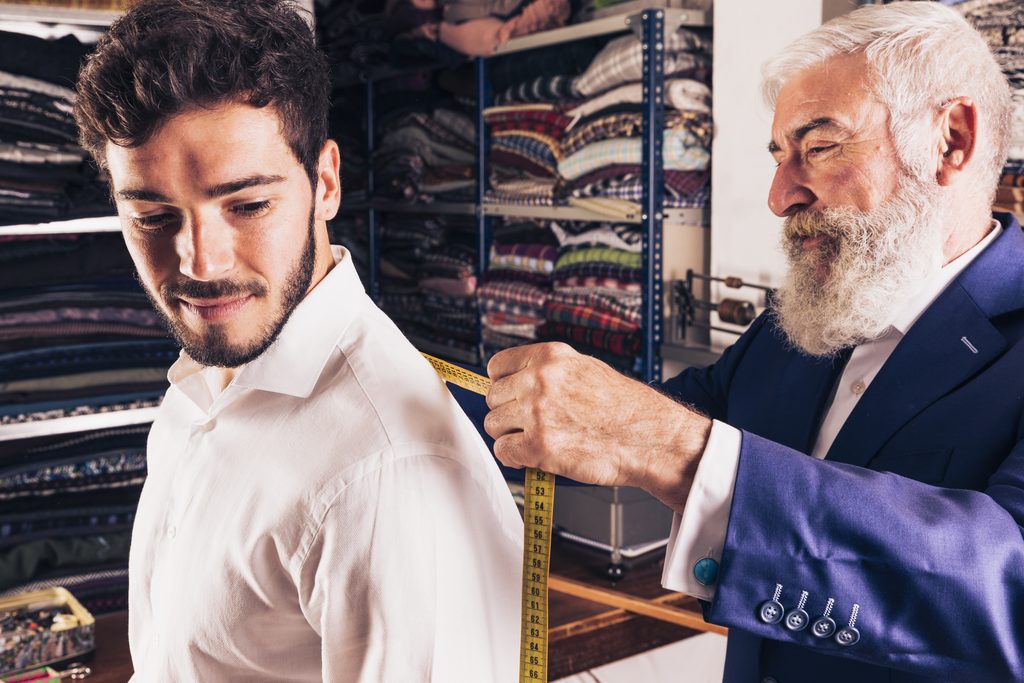
Shopping for a suit can feel more confusing than it should be. You’re often facing three very different paths: grab something off the rack, order made-to-measure, or commit to a full bespoke build. Each option carries its own price tag, timeline, and level of fit, and picking the wrong one usually means overpaying for customization you didn’t need or settling for a jacket that pulls across the shoulders.
This guide breaks down what sets these three approaches apart, so you can decide which one fits your body, budget, and calendar.
What Is the Difference Between Bespoke and Made-to-Measure?
Both start with your measurements, but they arrive at very different places. Understanding the difference comes down to one question: is the garment built from a brand-new pattern, or from an existing one that’s been adjusted?
Quick answer:
- Bespoke: A brand-new pattern, drafted from scratch for one person
- Made-to-measure: An existing pattern, adjusted to your measurements
- Off-the-rack: A fixed pattern, produced in standard sizes with no individual input
The Art of Bespoke Tailoring
Bespoke tailoring starts with a blank pattern. A tailor takes 30 or more precise measurements and drafts a design from scratch, built around your body and no one else’s. According to experts, bespoke draws a brand-new pattern for a single person and refines it over multiple in-person sessions.
Bespoke garments typically include:
- A pattern drafted only for you, never reused for another client
- Multiple in-person fittings as the garment takes shape
- Full control over fabric, lining, buttons, and stitching
- The highest cost and longest timeline of the three options
Made-to-Measure for a Perfect Fit
Made-to-measure works differently. A tailor starts with a standard base pattern and then adjusts it to your measurements. It’s a strong middle ground for people who want a better fit without the full bespoke price tag or timeline.
Made-to-measure garments typically include:
- An existing base pattern, adjusted to your body
- A noticeably better fit than standard sizing
- Some choice over fabric and select style details
- A moderate cost and turnaround, between off-the-rack and bespoke
How Off-the-Rack Clothing Fits Into the Picture
Off-the-rack clothing is the option most of us grew up with. Suits and shirts are mass-produced in fixed sizes, hung on a rack, and sold ready-to-wear, with no individual measuring involved at the production stage. That keeps cost low and availability immediate.
The tradeoff is fit. Standard sizing is built around average body proportions, and very few people are actually ordinary in every measurement. The comparison of tailored clothing vs ready-made usually comes down to this: ready-made clothing fits a general body shape, while tailored clothing fits your specific body. Off-the-rack clothing offers the fewest options for fit and design among the three categories.
Off-the-rack clothing works best when:
- You need a garment the same day
- Your proportions align closely with standard sizing
- Budget is the top priority over fit or customization
- Only minor alterations, like a hem, are needed to finish the fit
Ready-made clothing still has its place. Just go in knowing what you’re trading for that convenience.
Is Made-to-Measure Better Than Off-the-Rack?
For most people, yes. Made-to-measure starts from your actual measurements rather than a fixed size, so the baseline fit and construction are usually a step up from standard sizing. Off-the-rack can still work if a garment happens to match your shape closely, but that’s the exception rather than the rule.
Bespoke vs Made-to-Measure vs Off-the-Rack at a Glance
A simple side-by-side comparison of the three:
What Should I Look for in a Made-to-Measure Tailor Near Wellesley?
Not every tailor offering “custom” clothing delivers the same experience. A few factors separate a solid made-to-measure service from one that just adjusts a hem and calls it custom.
At a glance, look for:
- A measurement process built around 30 or more data points
- A fabric library sourced from established mills
- A clear six-to-eight-week turnaround, with rush options explained
- Verifiable reviews and years of operating history
- Mobile or house-call fittings, if convenience matters to you
- Upfront pricing, including deposit terms
Measurement Process
A thorough tailor takes far more than a handful of basic numbers. Look for a process built around 30 or more measurements, which produces a fit that holds up in the shoulders, chest, and sleeves.
Fabric Selection
The fabric library matters as much as the pattern. Access to thousands of options, sourced from established mills, gives you far more control over weight, texture, and appearance.
Turnaround Time
Quality construction takes time. A timeline of six to eight weeks is common, so be cautious of anyone promising a rushed turnaround without explaining how quality is maintained.
Reputation and Reviews
Client reviews and years in business are strong indicators of consistency and a safer bet than a newer shop with no history to evaluate.
Convenience and Mobile Service
Some tailors bring fabric samples and measurement tools to your home or office, which fits far more easily into a demanding week.
Pricing Transparency
A trustworthy tailor explains costs upfront, including deposits and what happens if adjustments are needed after the first fitting.
Who Offers Custom Tailoring in Massachusetts?
Massachusetts has a long tailoring tradition, particularly around Greater Boston, where demand for formalwear and business attire stays steady year-round. A proper bespoke or made-to-measure process is defined by the number of individual measurements taken, not just the label on the garment.
When comparing local tailors, check for:
- An established showroom with an in-person fabric library
- A measurement process detailed enough for both suits and shirts
- Verified reviews on platforms like Google and Yelp
- Mobile fittings, for added flexibility around a busy schedule
Where Can I Get Made-to-Measure Suits Near Boston?
Greater Boston has a strong concentration of tailors, but availability isn’t the same as quality. Look for a shop within a reasonable drive or one that offers mobile fittings, an in-person or mailed fabric selection, and a track record backed by verifiable client reviews before booking a consultation.
Frequently Asked Questions
What is bespoke tailoring?
Bespoke tailoring builds a garment entirely from scratch for one individual. A tailor drafts a unique pattern based on detailed measurements, then constructs and refines the piece through multiple fittings, offering the highest level of customization of the three methods.
What is made-to-measure clothing?
Made-to-measure clothing starts with an existing base pattern that’s adjusted to your personal measurements.
Is made-to-measure more affordable than bespoke?
Yes, made-to-measure is generally less expensive than bespoke, since it relies on an adjusted pattern rather than one built from scratch.
Which option provides the best fit?
Bespoke provides the most precise fit because the pattern is created specifically for your body and refined through several fittings. Made-to-measure comes in second.
Is off-the-rack clothing suitable for everyone?
Off-the-rack works well for people whose proportions align closely with standard sizing, or for anyone needing a garment immediately. For most people, though, alterations or a move toward made-to-measure delivers better results over time.
Final Thoughts
There’s no single right answer among bespoke, made-to-measure, and off-the-rack. Your choice depends on your budget, timeline, and the level of precision you need for the occasion. Off-the-rack works for convenience, made-to-measure strikes a practical balance, and bespoke delivers a garment built entirely around you. Whatever level fits your situation, the goal stays the same: clothing that fits properly because it was made for you.
Ready to move beyond standard sizing? Custom Clothiers has spent more than five decades offering to tailor custom clothing that fits right the first time. Call us to schedule a consultation!